 Skip to content

The Future of Copper Companies: How Renewable Energy and EVs Are Driving Copper Ingot Investment
Every few years, a commodity catches fire in investment circles because the fundamentals shift dramatically. Right now, that metal is copper. Not because of speculation or hype, but because two massive technological transitions—renewable energy infrastructure and electric vehicle adoption—are fundamentally reshaping demand. Major copper companies know this. Analysts tracking copper prices see it in supply projections. And increasingly, individual investors are asking whether they should hold physical copper ingots as part of a long-term strategy tied to these industrial shifts.
Copper Companies Face Unprecedented Demand from EV Manufacturing
An internal combustion car uses roughly 20-25 kilograms of copper. A battery electric vehicle needs 80-90 kilograms. That four-fold increase isn’t coming from one component—it’s wiring harnesses, motors, battery systems, and charging infrastructure all demanding more metal. Multiply that by projected EV sales over the next decade, and copper companies face a demand curve unlike anything in recent history.
This isn’t theoretical. On r/ElectricVehicles and r/Investing, users regularly discuss supply bottlenecks in battery materials. Copper doesn’t get the same attention as lithium or cobalt, but it’s equally critical and harder to replace. One Reddit thread analysed mining timelines, noting that bringing new copper production online takes seven to ten years from discovery to first pour. Existing copper mining operations can’t expand fast enough to meet projected needs.
For people considering investing in copper, this provides a clear thesis. If EV adoption continues as forecast, demand will rise structurally. Supply struggles to respond quickly. That tension should support copper prices in the long term, making physical holdings such as copper ingots an interesting hedge against industrial inflation.
Investing In Copper as Renewable Energy Infrastructure Scales Globally
Wind turbines, solar farms, and grid modernisation are all copper-intensive. A single wind turbine can require 3-4 tons of copper. Solar installations need copper for wiring and inverters. Upgrading transmission grids to handle distributed renewable generation requires massive amounts of copper concentrate processed into usable forms.
Governments worldwide are committing hundreds of billions of dollars to the energy transition. That money translates directly into copper demand. Unlike cyclical construction booms that rise and fall, this is policy-driven infrastructure spending that’s expected to persist for decades. Copper companies are responding by trying to expand production, but permitting delays, environmental concerns, and simple geology limit how fast new supply can arrive.
Reddit’s r/RenewableEnergy and r/ClimateActionPlan communities constantly discuss these infrastructure needs. One detailed post broke down copper requirements for different renewable technologies, concluding that even aggressive recycling programs won’t meet demand without significant new copper mining. For investors, this suggests that the copper price per kg has fundamental support beyond short-term trading dynamics.
Physical copper ingots become relevant here as a way to gain exposure without the complexity of futures contracts or the company-specific risks of mining stocks. You’re holding the actual metal that renewable projects need, with minimal counterparty risk.
Copper Prices: How Supply Constraints Meet Growing Industrial Demand
Here’s where theory meets market reality. Copper prices have historically been volatile, driven by Chinese construction cycles, global manufacturing output, and speculative flows. But the EV and renewable energy demand is different—it’s structural, policy-supported, and multi-decade in scope.
Supply-side constraints compound the issue. Ore grades at existing copper mining sites are declining. Discoveries are rarer and often in jurisdictions with political or environmental challenges. Refining copper concentrate into pure metal requires energy and infrastructure that also face bottlenecks. All of this suggests that the copper price per pound could see sustained upward pressure even during broader economic slowdowns.
Users on r/Commodities and r/InvestmentClub regularly debate this. Some argue that high prices will incentivise substitution or efficiency improvements. Others point out that copper’s electrical properties make it irreplaceable in most applications. The consensus among bulls is that while price spikes will eventually moderate, the floor under copper prices is rising as baseline industrial demand grows.
Copper Products: Why Physical Holdings Make Sense in This Environment
If you believe the demand thesis, the next question is how to gain exposure. Mining stocks carry operational and political risk. ETFs have management fees and tracking issues. Futures require active management and margin. Physical copper products like copper ingots offer something different—direct ownership with no ongoing costs beyond storage.
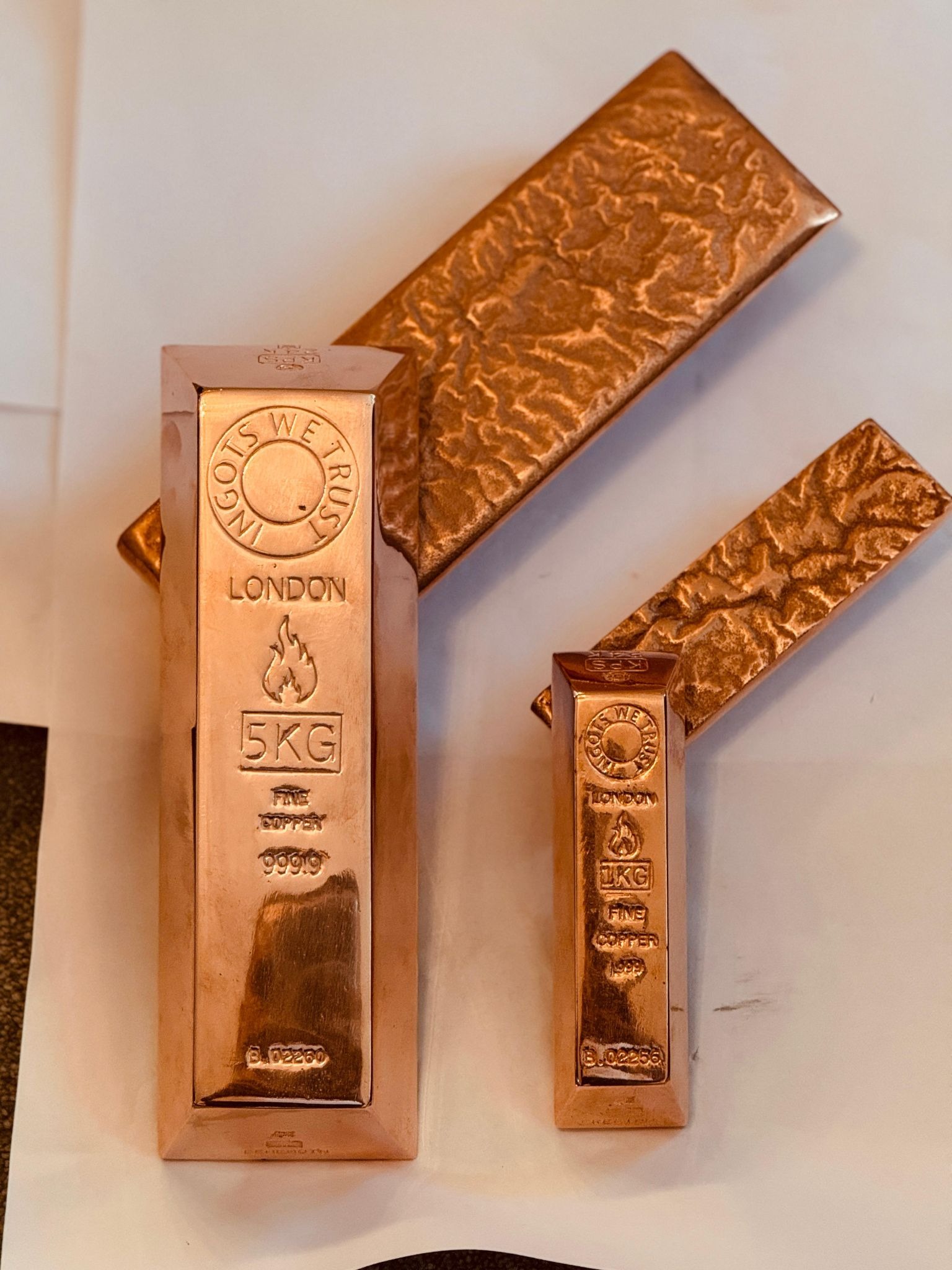
The challenge is that copper is heavy and relatively cheap per ounce compared to gold or silver. A meaningful investment requires physical space. This is where products like The Precious (smaller, premium pieces) versus The Behemoth (large utility bars) become relevant. Smaller copper ingots are easier to store and eventually sell, while larger bars maximise metal per dollar for those with space.
Discussions on r/Pmsforsale show that quality matters even more when holding for years. Well-documented pieces from reputable makers are easier to liquidate when you eventually want to exit. Generic copper for sale at rock-bottom premiums might save money upfront, but it creates friction when selling. If copper prices do rise significantly as the EV and renewable thesis plays out, you’ll want pieces that buyers trust without lengthy verification.
FAQ: Copper Investment in the EV and Renewable Era
Q: Are copper companies good investments alongside physical copper ingots?
They can be complementary. Mining stocks offer leverage to copper prices but carry operational risk. Physical copper ingots provide direct metal exposure with no counterparty risk. Many investors hold both for balanced exposure to the structural demand thesis.
Q: How much will EVs actually affect copper prices long-term?
Projections vary, but most analysts expect EVs to add 2-3 million tons of annual copper demand by 2030. That’s roughly 10-15% of current global production, creating sustained pressure on supply and supporting a higher copper price per kg over time.
Q: Should I wait for copper prices to drop before investing in copper physically?
Timing commodity markets is difficult. If you believe in the long-term demand thesis from EVs and renewables, dollar-cost averaging into physical copper products over time may be smarter than trying to pick a bottom. Focus on quality pieces that will hold value through price cycles.
Q: What’s the biggest risk to the copper demand thesis?
Technological substitution or dramatic efficiency improvements could reduce copper intensity in EVs and renewables. However, copper’s electrical properties make it hard to replace in most applications. An economic recession could delay infrastructure projects, but policy support for the energy transition provides a floor under demand.
Q: How do I choose between investing in copper companies versus physical copper ingots?
Consider your risk tolerance and investment timeline. Copper companies offer potential for larger returns but with volatility and company-specific risks. Physical copper ingots offer stable exposure to metal prices with minimal ongoing risk, making them ideal for long-term holders who believe in structural demand growth.




Leave a Comment