 Skip to content
How to Invest in Copper Ingots Like The Precious and The Behemoth?
If you’ve stumbled across the terms The Precious and The Behemoth while browsing copper collector forums or UK stacker communities, you’re already closer to understanding physical copper investing than most beginners. These aren’t just catchy names they represent two genuinely different approaches to holding copper ingots, and choosing between them (or blending both) shapes everything from your entry cost to your long-term resale options.
This page is for anyone who wants a practical, no-nonsense answer to how investing in copper through physical ingots actually works, including what to look for, what to avoid, and how to use copper prices intelligently rather than just reacting to them.
Investing in Copper Ingots: The Case for Going Physical in the UK Market
Investing in copper through physical ingots is a fundamentally different experience from buying shares in copper companies or holding a metals ETF. You own something real, measurable, verifiable, and priced directly against live copper prices rather than wrapped in layers of financial product risk. That directness is exactly what attracts a growing number of UK buyers who want their copper exposure to actually mean something tangible.
The physical copper market in the UK has matured considerably over the past few years. Reliable sellers now offer documented purity grades, live pricing relative to the copper price per pound, and accessible formats for buyers at every level. What was once a niche corner of the precious metals world is increasingly treated as a legitimate standalone asset class, and the fundamentals driving copper prices make that shift feel well-timed.
Threads across r/UKInvesting and r/Silverbugs regularly feature buyers describing how they started with silver and gold before discovering that copper ingots offered better value-per-pound at current market rates. The recurring theme is that physical copper rewards those who take the time to understand purity grading and pricing mechanics and penalises those who don’t.
The Precious and The Behemoth: Choosing the Right Copper Ingot Format
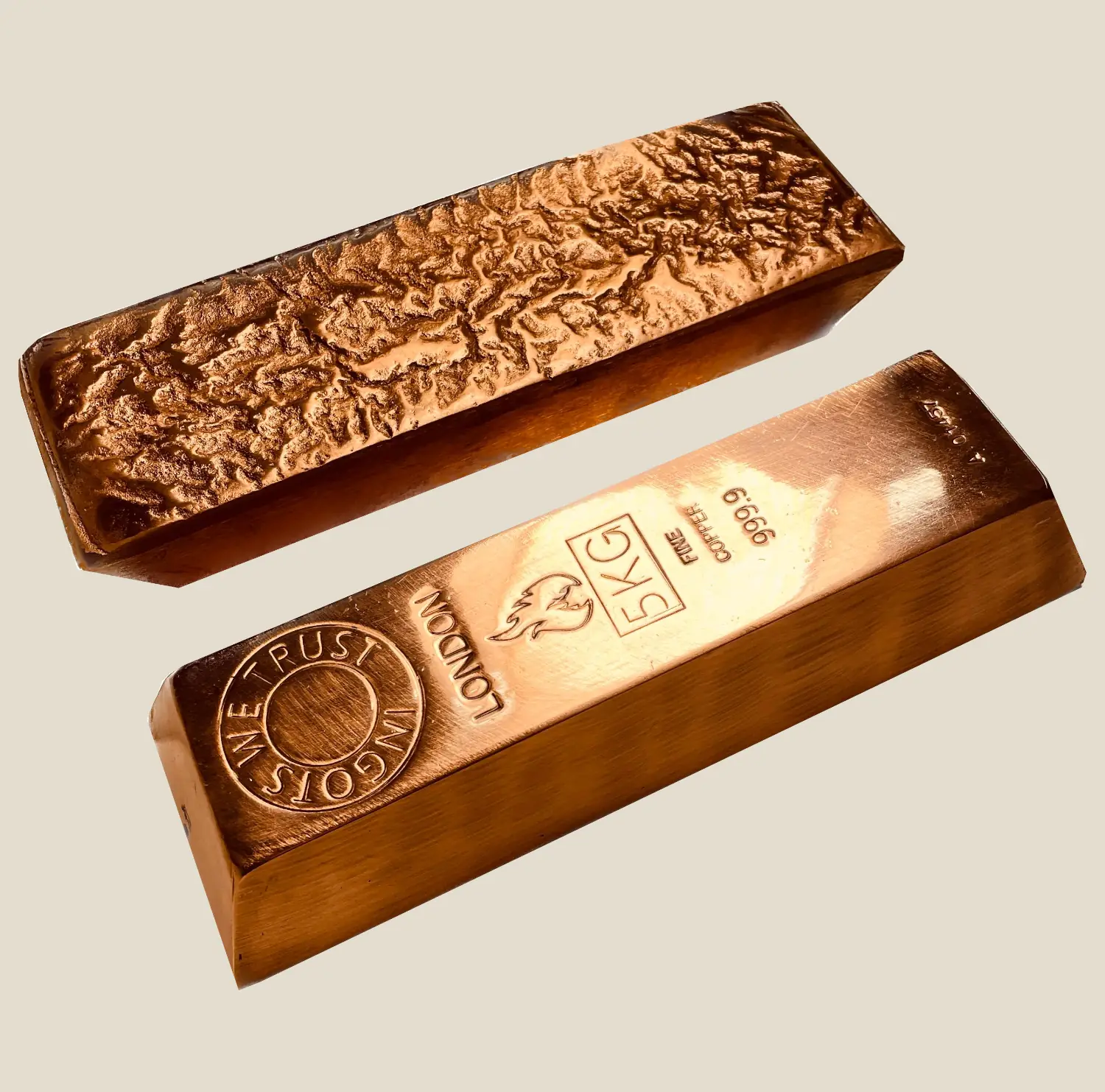
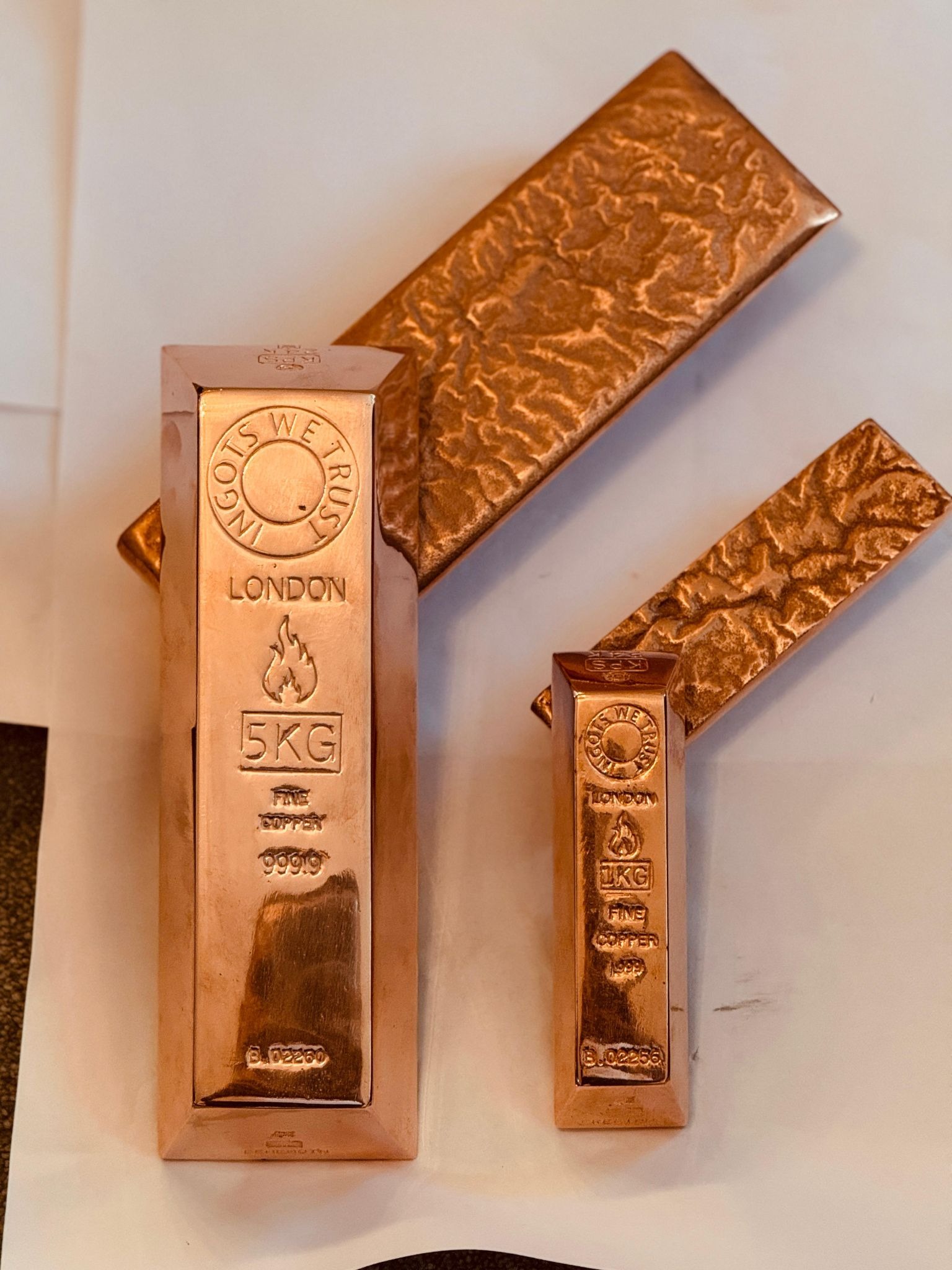
The Precious refers to smaller, often artisan-finished copper pieces, coins, hand-poured miniature bars, and decorative ingots that combine intrinsic copper value with a visual or collector appeal. The Behemoth, by contrast, describes oversized copper ingots, multi-kilogram cast blocks where raw weight and verified purity do the talking, and fabrication premiums are minimal.
Both formats have a legitimate place in a copper portfolio, but they solve different problems. The Precious is ideal for buyers who want a lower initial outlay, enjoy the collecting aspect, and are happy to pay a modest premium above the price of copper per kg for aesthetics or limited availability. The Behemoth suits investors whose primary goal is maximum copper value per pound spent, where the gap between what you pay and what the metal is worth at spot should be as narrow as possible.
UK stacker communities consistently describe the most balanced approach as holding The Behemoth as the bulk of a copper position and using The Precious for smaller, more liquid top-ups that are easy to sell or trade individually. That structure gives you both weight and flexibility, which matters when copper prices are moving quickly, and you want options.
Copper Ingots and Purity: Why the Grade Determines Everything
Copper ingots and purity are inseparable topics, and any guide that treats them as optional extras is doing you a disservice. The price of copper per kg quoted on any legitimate platform is based on electrolytic grade copper: 99.9% or higher. That is the benchmark. Everything below it trades at a discount, and the size of that discount depends on how far from the benchmark the product actually sits.
Electrolytic copper produced from copper concentrate through a controlled refining process is what you should be targeting when buying copper ingots for investment. Fire-refined copper, sitting around 99.0–99.5% purity, carries a small but real discount. Secondary copper reclaimed by a coppersmith from mixed scrap can vary so widely that pricing it against spot copper is almost meaningless without a proper assay.
Ingots We Trust provides documented purity certification with every product, which removes the ambiguity that catches buyers out on generic marketplaces. When you’re committing real money to a physical asset, knowing exactly what grade you’re holding and being able to prove it to a future buyer is not a nice-to-have. It’s the foundation of a sensible copper investment.
Copper Prices and Market Trends: Timing Your Entry Into Physical Copper
Copper prices are driven by a specific and fairly readable set of inputs. On the demand side, electrification of EVs, grid infrastructure, and renewables are the dominant forces. On the supply side, copper mining output from major producing regions, copper concentrate processing capacity, and the operational health of the copper companies that run those facilities set the ceiling on how quickly supply can respond to rising demand.
For UK buyers of physical copper ingots, the copper price per pound is worth tracking weekly rather than daily. The short-term noise is less useful than the medium-term trend. What matters more is whether copper prices are moving on structural demand signals or speculative positioning. Structural demand driven by real industrial consumption of high-purity copper plates and refined ingots tends to be stickier and more reliable for long-term holders.
Community discussions on r/CopperStackers and similar UK forums suggest that buyers who establish a target price range based on the price of copper per kg and then buy in stages as prices approach or dip below that range tend to build more cost-effective positions than those who make single large purchases based on a single day’s rate.
Copper for Sale in the UK: What to Check Before You Buy Ingots or Coins
Finding copper for sale is easy. Finding copper for sale that is fairly priced, correctly graded, and backed by a seller who will still be around when you want to resell takes more effort, but it’s effort well spent. The UK market has grown significantly, and with that growth has come both excellent specialist sellers and a longer tail of poorly documented products that look attractive until you dig into the details.
Copper coins deserve particular attention here. Unlike copper ingots, where pricing is largely anchored to the copper price per pound, copper coins carry a collector premium that can vary enormously. A coin from a recognised mint with strong secondary market demand is a different proposition to a generic pour labelled as a coin to justify an inflated price. Understanding which category you’re buying into before parting with money avoids the frustration that comes up repeatedly in UK collector forums.
Copper plates sit somewhere between ingots and decorative pieces, flat-rolled, consistently sized, and typically priced closer to spot than coins. They’re a practical choice for buyers who want verified high-purity copper without the bulk of large ingot formats. Whatever format you choose, always confirm purity grade, check the asking price against the current price of copper per kg, and buy from a seller who provides documentation as standard. Learn more about What Is the Price of Copper per Kg for High-Purity Products?
Frequently Asked Questions
What is the difference between The Precious and The Behemoth when investing in copper?
The Precious covers smaller copper pieces coins, miniature bars, and artisan pours where collector appeal and accessibility are part of the value proposition. The Behemoth describes large-format copper ingots where raw weight and minimal premium above the price of copper per kg are the priority. Both serve legitimate purposes: The Precious suits lower entry points and diversified collecting, while The Behemoth is favoured by investors who want bulk copper value at near-spot pricing.
How do copper prices affect the value of physical copper ingots I already own?
Directly and proportionally, provided your ingots are high-purity electrolytic grade. If you hold a kilogram of 99.9% copper and the price of copper per kg rises by £1.00, the intrinsic value of your holding increases by the same amount. Lower-purity copper tracks less cleanly because buyers discount for refining uncertainty. This is why purity grade at the point of purchase is such a critical factor in how reliably your copper holdings respond to copper price movements.
Is copper for sale through physical ingots a good hedge against inflation?
Copper has historically shown a reasonable correlation with inflation in periods of strong industrial demand, because the same economic conditions that drive prices higher tend to also drive copper consumption upward. Physical copper ingots give you direct exposure to this without any counterparty risk. That said, copper prices can also fall during periods of economic slowdown, so it works best as part of a diversified strategy rather than a standalone inflation hedge.
What purity should copper ingots be for them to track the copper price per pound accurately?
For your copper ingots to track the copper price per pound as accurately as possible, you want electrolytic grade copper at 99.9% purity or above. This is the standard on which the London Metal Exchange bases its benchmark pricing. Products below this threshold trade at discounts that vary by grade, and that discount can fluctuate independently of spot copper prices, making lower-purity material harder to value consistently.
How does copper mining output affect the price I pay for physical copper ingots?
Copper mining output feeds into the copper concentrate supply, which in turn determines how much refined copper is available to meet industrial and collector demand. When major copper companies report production shortfalls, whether from environmental restrictions, ore grade decline, or infrastructure issues supply of refined copper tightens, pushing copper prices higher. For physical buyers, this means that staying loosely informed about copper mining news gives useful context for timing purchases and understanding why the price of copper per kg is moving in a given direction.



Leave a Comment