

Copper Coins vs. Ingots: A Guide for Smart Investors
One of the first decisions new physical copper buyers face is whether to start with copper coins or copper ingots. It seems like a simple choice, but it has meaningful implications for how your copper holdings are valued, how easily you can sell them, and how closely they track the copper price per pound over time. Getting this decision right early saves you from expensive recalibrations later.
This guide compares copper coins and copper ingots across the dimensions that matter most for investors: purity, pricing, premiums, resale liquidity, and alignment with copper prices, so you can make an informed choice based on your goals rather than just what looks appealing in a product listing.
Copper Coins vs Copper Ingots: Understanding the Fundamental Difference
Copper coins and copper ingots both contain copper, but they are priced on fundamentally different logics. A copper ingot’s value is almost entirely determined by its copper content and purity grade, measured against the current price of copper per kg. A copper coin’s value combines its copper content with a collector or numismatic premium that reflects the coin’s design, mintage, condition, and secondary market demand.
That distinction matters enormously for anyone investing in copper with the expectation that their holdings will appreciate in line with copper prices. A high-purity copper ingot, particularly in the Behemoth format, moves in near-lockstep with the copper price per pound because its value is almost purely metal-driven. A copper coin has a more complex relationship: its metal floor rises with copper prices, but the collector component above that floor can fluctuate independently, sometimes amplifying gains and sometimes diluting them.
Neither is objectively better; they serve different purposes. The point is to be conscious of which logic you are operating under when you buy.
Copper Ingots and Purity: Why Ingots Set the Standard for Investment Grade
For investment purposes, copper ingots are where purity documentation is clearest and most standardised. A copper ingot produced from electrolytic cathode copper at 99.9% purity carries a purity certificate that directly references the LME Grade A standard, the same standard that the copper price per pound is based on. That makes the fair value of the ingot calculable against a universally recognised benchmark with no ambiguity.
Copper coins present a more varied picture. High-quality copper coins from established mints where the copper content and purity are explicitly documented can be as clear as copper ingots on the purity question. But a significant proportion of copper coins available in the UK copper for sale market carry only vague descriptions like ‘pure copper’ or ‘.999 copper’ without supporting documentation. At small weights, the absolute value difference between documented and undocumented purity is modest. As the collection size grows, it compounds into a meaningful portfolio valuation uncertainty.
The consistent recommendation from UK copper investment communities, particularly r/CopperStackers, where experienced stackers frequently advise newer members on this exact question, is to prioritise documented purity in both copper coins and copper ingots, and to default to copper ingots when the coin’s purity documentation is unclear.
Copper Prices and Market Trends: Which Format Tracks Spot More Effectively
For buyers whose primary motivation is investing in copper with exposure to copper price appreciation, the tracking efficiency of the format matters. Copper ingots, particularly larger pieces like The Behemoth, track the copper price per pound most directly because the metal value component dominates the total price. When the price of copper per kg rises 10%, a high-purity copper ingot valued close to spot rises approximately 10% in intrinsic value.
Copper coins track copper prices more loosely. The collector premium component above spot can expand or contract based on market sentiment, secondary demand for specific designs, and the general appetite for numismatic copper items, factors entirely unrelated to copper mining supply or copper company output data. In a strongly rising copper price environment, coins may underperform relative to spot. In a market where collector interest is high, they may outperform.
For smart investors who want predictable copper price exposure, copper ingots are the cleaner instrument. For collectors who enjoy the aesthetic and numismatic dimension of copper, copper coins are rewarding but require a more nuanced valuation framework.
The Precious vs The Behemoth: Finding the Right Mix of Coins and Ingots
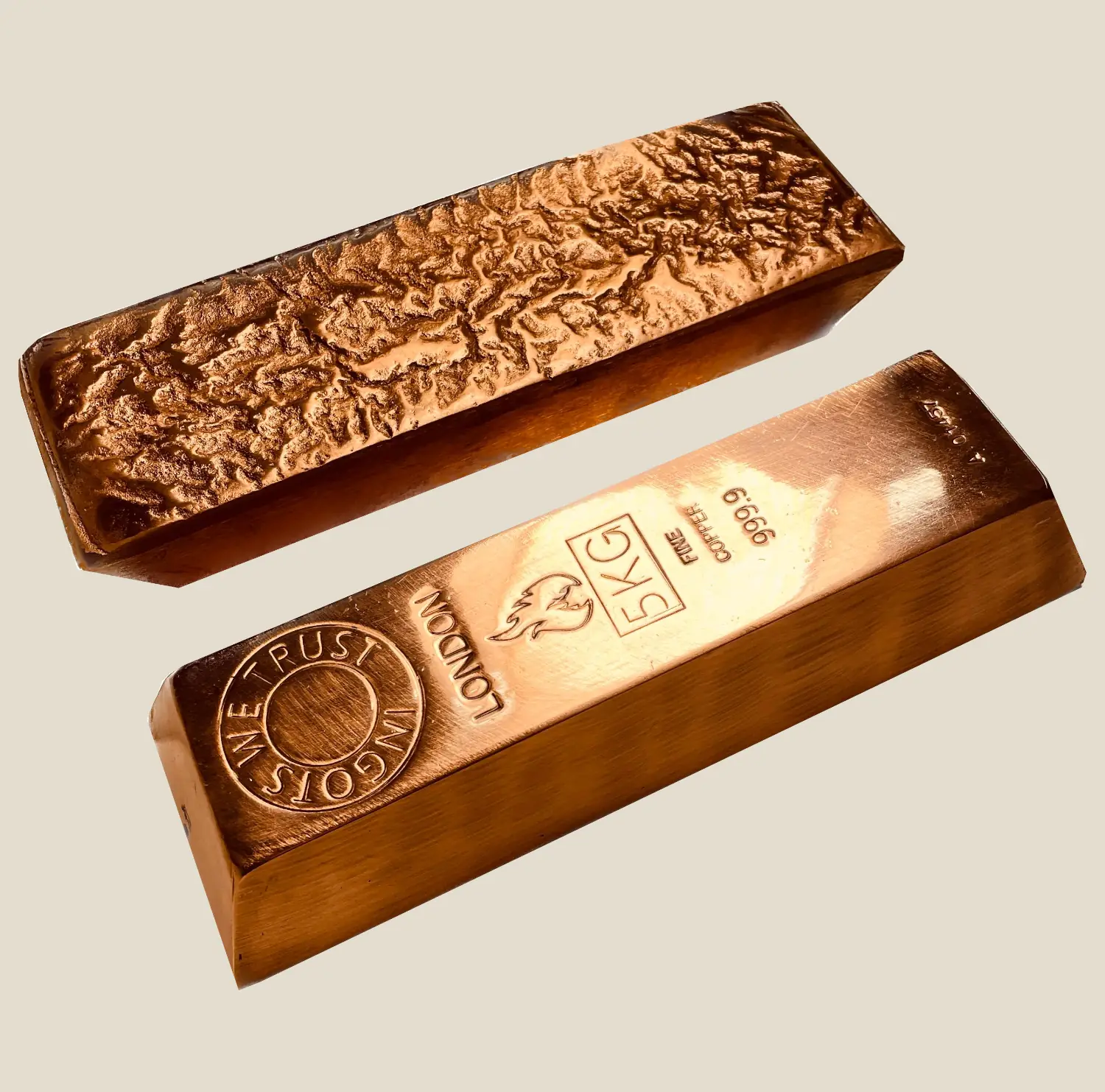
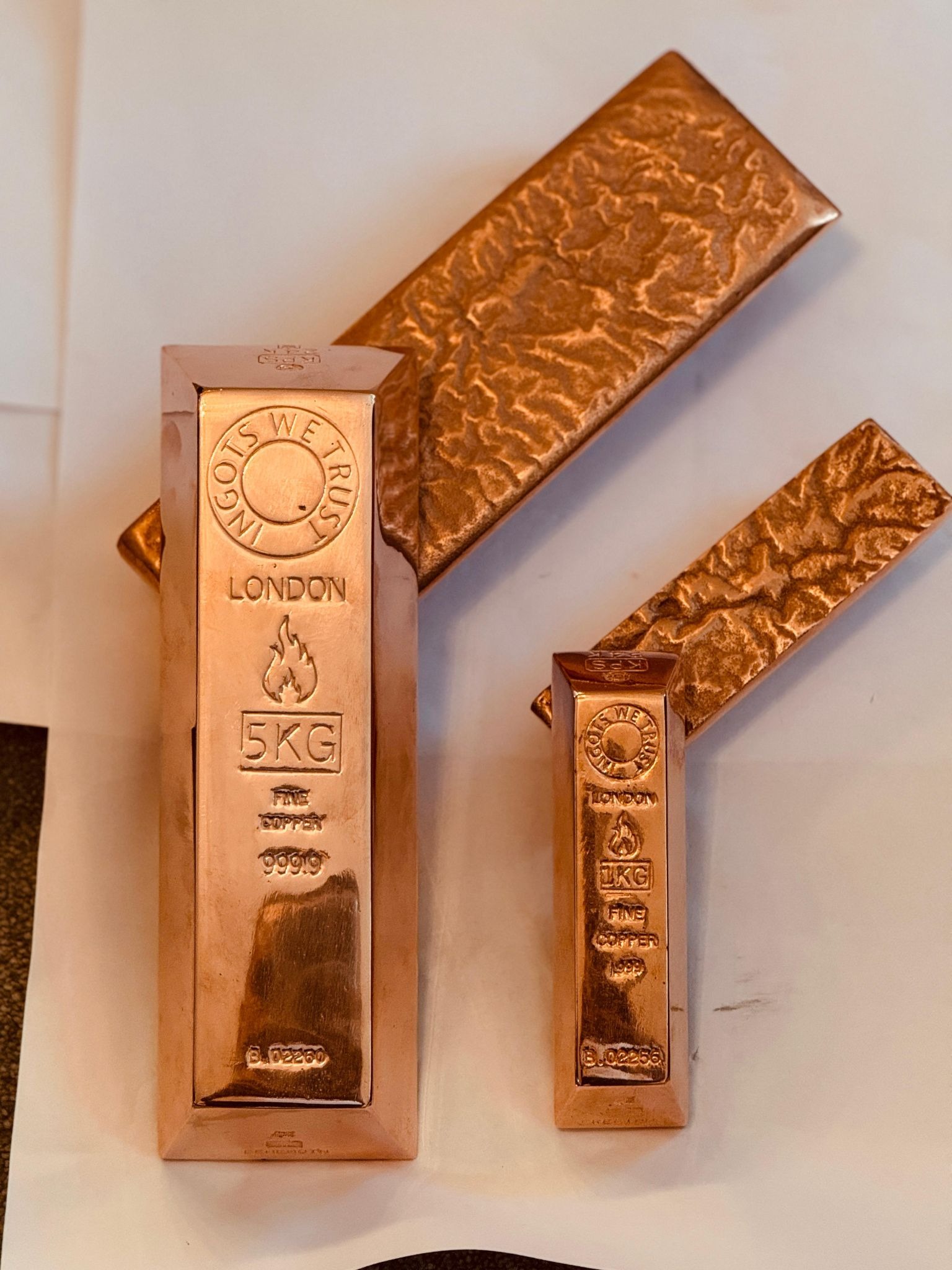
Ingots We Trust’s The Precious range includes both smaller copper ingots and artisan copper pieces that share some characteristics with copper coins, accessible price points, visual character, and collectability. The Behemoth is unambiguously the large-format investment copper ingot, priced close to the price of copper per kg with minimal collector premium overlay.
For investors building a physical copper portfolio from scratch, a thoughtful mix of The Precious and The Behemoth typically outperforms a pure copper coin strategy on both purity clarity and copper price tracking efficiency. The Precious provides the accessible, flexible entry layer; The Behemoth provides the bulk investment weight. Copper coins from outside these ranges can supplement the portfolio where specific numismatic interest justifies the collector premium, but should not form the core of a copper investment position if reliable copper price appreciation is the primary goal. Learn more about Copper for Sale: Why Choose High-Purity Copper Ingots
Frequently Asked Questions
Are copper coins a good way to start investing in copper?
Copper coins from documented, reputable mints can be a good entry point for first-time copper investors. They are accessible, tangible, and easy to understand. The key is to choose coins with explicit purity documentation and to be clear about how much of the price is metal value versus collector premium. If copper price appreciation is your primary motivation, the collector premium on coins means your holdings track the copper price per pound less directly than copper ingots would. Many UK investors start with The Precious range of smaller copper ingots, which combines accessibility with cleaner purity tracking.
How do premiums on copper coins compare to copper ingots at current copper prices?
Copper coins typically carry premiums of 15–40% above the price of copper per kg, depending on the mint, design, and mintage. Smaller copper ingots in The Precious range carry premiums of roughly 10–20% above spot. Large-format copper ingots in The Behemoth range carry premiums of 5–12% above spot. The premium difference reflects fabrication costs and collector demand, with coins carrying the highest premiums because their designs command the broadest collector market interest, and large ingots carrying the lowest because they are priced primarily as investment copper.
Do copper coins or copper ingots offer better resale liquidity?
Both have liquid resale markets in the UK, but the pricing logic differs. Copper ingots, particularly high-purity, documented pieces, resell cleanly against the copper price per pound benchmark. Buyers can verify purity and calculate fair value quickly. Copper coins have a broader pool of potential buyers, including numismatists and collectors, but the collector premium component means the resale price depends partly on current collector sentiment as well as copper prices. Ingots We Trust’s copper for sale products are specifically designed to support easy resale through transparent purity documentation and live-price-referenced pricing.
How does copper mining supply affect copper coin pricing differently from copper ingot pricing?
For copper ingots, copper mining supply affects pricing directly. Tighter mining output raises the price of copper per kg, and the ingot value moves proportionally. For copper coins, copper mining supply affects only the metal floor of the price; the collector premium component above that floor responds to different market forces. This means that in a rising copper price environment driven by copper mining constraints, copper ingots typically appreciate more closely in line with the supply story than copper coins do.
Should I hold both copper coins and copper ingots as part of a physical copper investment?
Yes, a combination of copper coins and copper ingots typically produces a more balanced and versatile physical copper portfolio than either format alone. Copper coins in The Precious range offer flexibility, smaller resale units, and collector appeal. Copper ingots in The Behemoth range provide bulk copper value at near-spot pricing and clean exposure to copper price appreciation. Using both gives you the resilience of different demand drivers, metal price appreciation and collector market interest within a single physical copper-focused strategy.


Leave a Comment